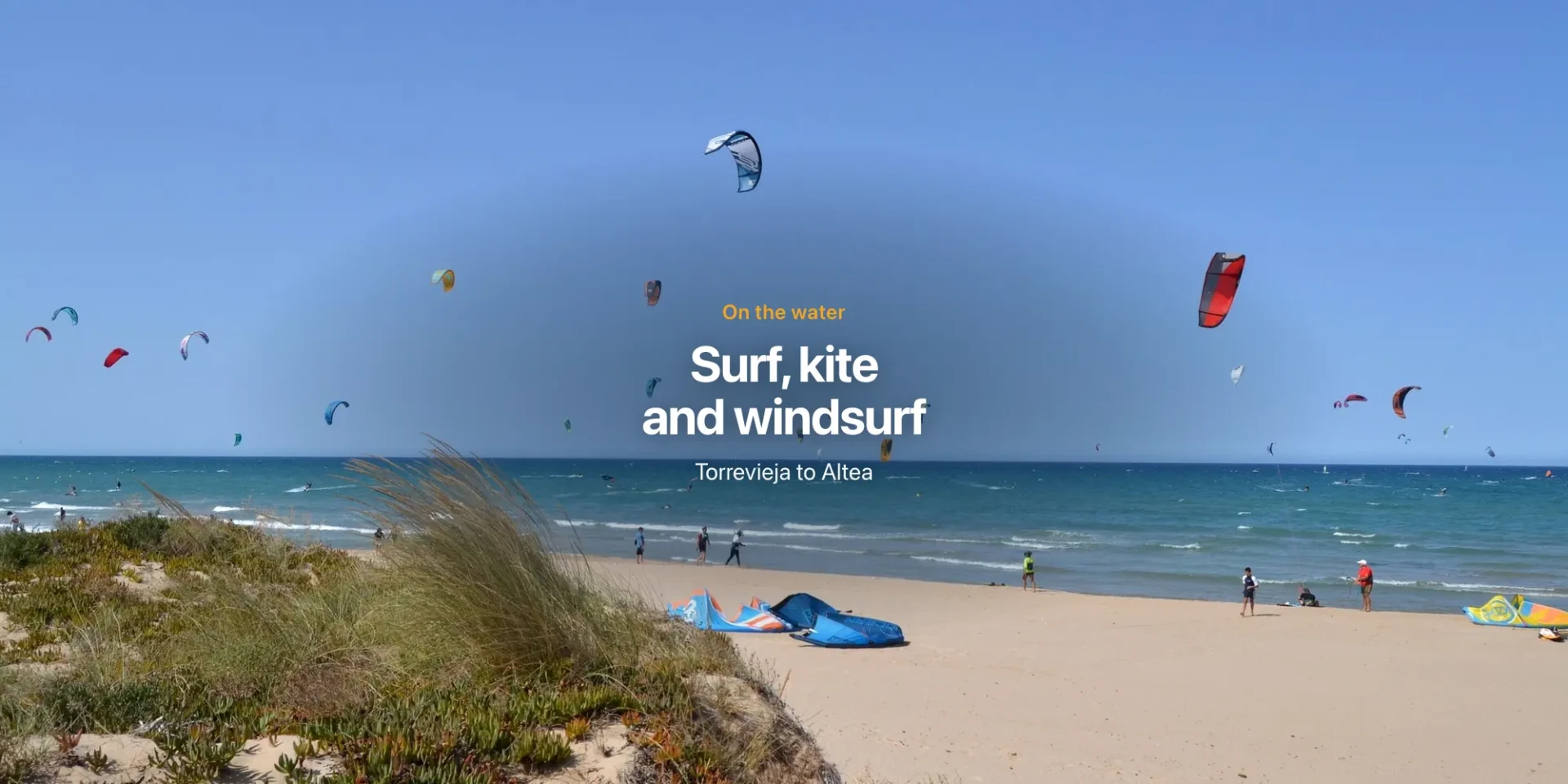
Water sports on the Costa Blanca change from town to town. Go to Dénia for kitesurfing, Santa Pola for windsurfing, San Juan and Calpe for surf in the cooler months, Jávea for paddling, and Tabarca or Calpe for diving. Thermal winds run from spring to early autumn, while easterlies bring the waves.
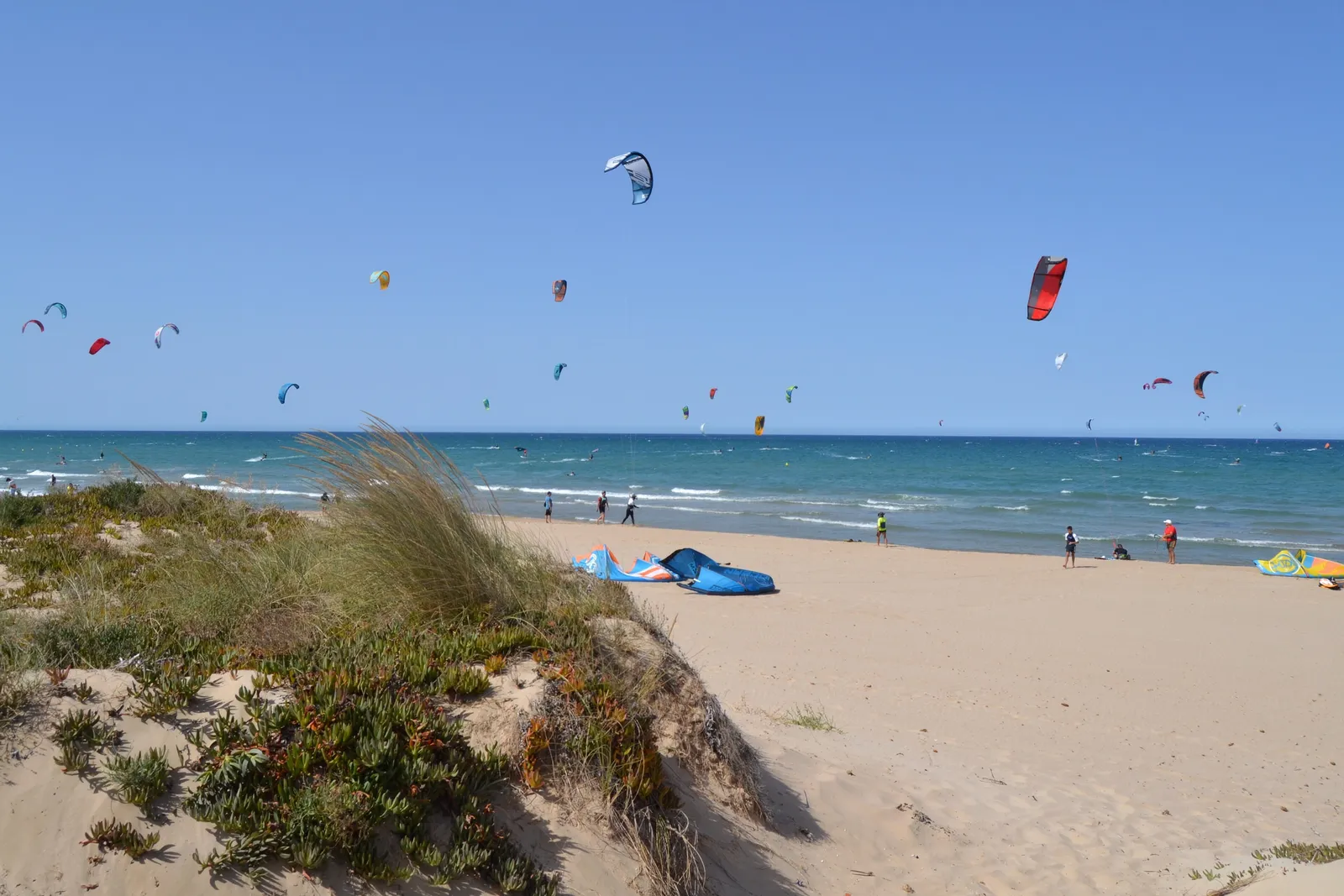
Water sports on the Costa Blanca: the spots at a glance
| Spot | Best for | Wind or conditions | Best months | Who it suits |
|---|---|---|---|---|
| Les Deveses, Dénia | Kitesurf, windsurf | Thermal Garbí, side-shore, above 8 knots | March to September | All levels, beginners with a school |
| Santa Pola | Windsurf, light-wind kite | Southerly Leveche, rarely reaches Force 4 | April to October | Learners and freeriders |
| Guardamar | Kite, windsurf | Southerly thermals by the harbour wall | Spring and summer | Freestyle riders |
| El Pinet, Elche coast | Wave kite, windsurf | Cross-onshore easterly | Levante days | Experienced riders, strong shorebreak |
| San Juan, Alicante | Surf, wave kite | Levante waves on a sandbar | Winter | Surfers |
| Muchavista and Río Seco, El Campello | Surf, kite | North-westerly at La Zofra, Levante at Río Seco | Windy days | Surfers and wave kiters |
| River Algar mouth, Altea | Kite, windsurf | Levante, cross-on | Spring and summer | Experts only, pebble beach |
| Calpe | Diving, paddling, surf | East-south-easterly swell for surf | Cooler months for surf | Intermediate and advanced surfers |
| Arenal and coves, Jávea (Xàbia) | Paddle boarding, kayak | Sheltered coves | Summer | Families and beginners |
| Los Náufragos, Torrevieja | Paddle boarding, kayak | Calm water, occasional surf | Summer | Beginners and families |
| Tabarca island | Snorkelling, diving | Protected marine reserve | All year | Snorkellers, certified divers |
When is the best time for water sports on the Costa Blanca?
From spring to early autumn, thermal winds set the pattern. The regional tourist board gives March to September as the best period on the Dénia coast, and Barceló's Alicante guide puts the thermals there at 12 to 20 knots. Further south, the Kite and Windsurfing Guide says the Leveche blows reliably at Santa Pola from April to October, but it rarely reaches Force 4.
The waves come from a different source. The same guide ties the wave days to the easterly Levante in winter, Barceló rates San Juan best in winter, and Surf-Forecast describes summer at Calpe as mostly flat.
AEMET's 1981 to 2010 normals for Alicante give average daytime highs of 24 to 31°C from May to October, and 17 to 21°C from November to April. October still averages about 25°C by day, with the sea at about 22.7°C.
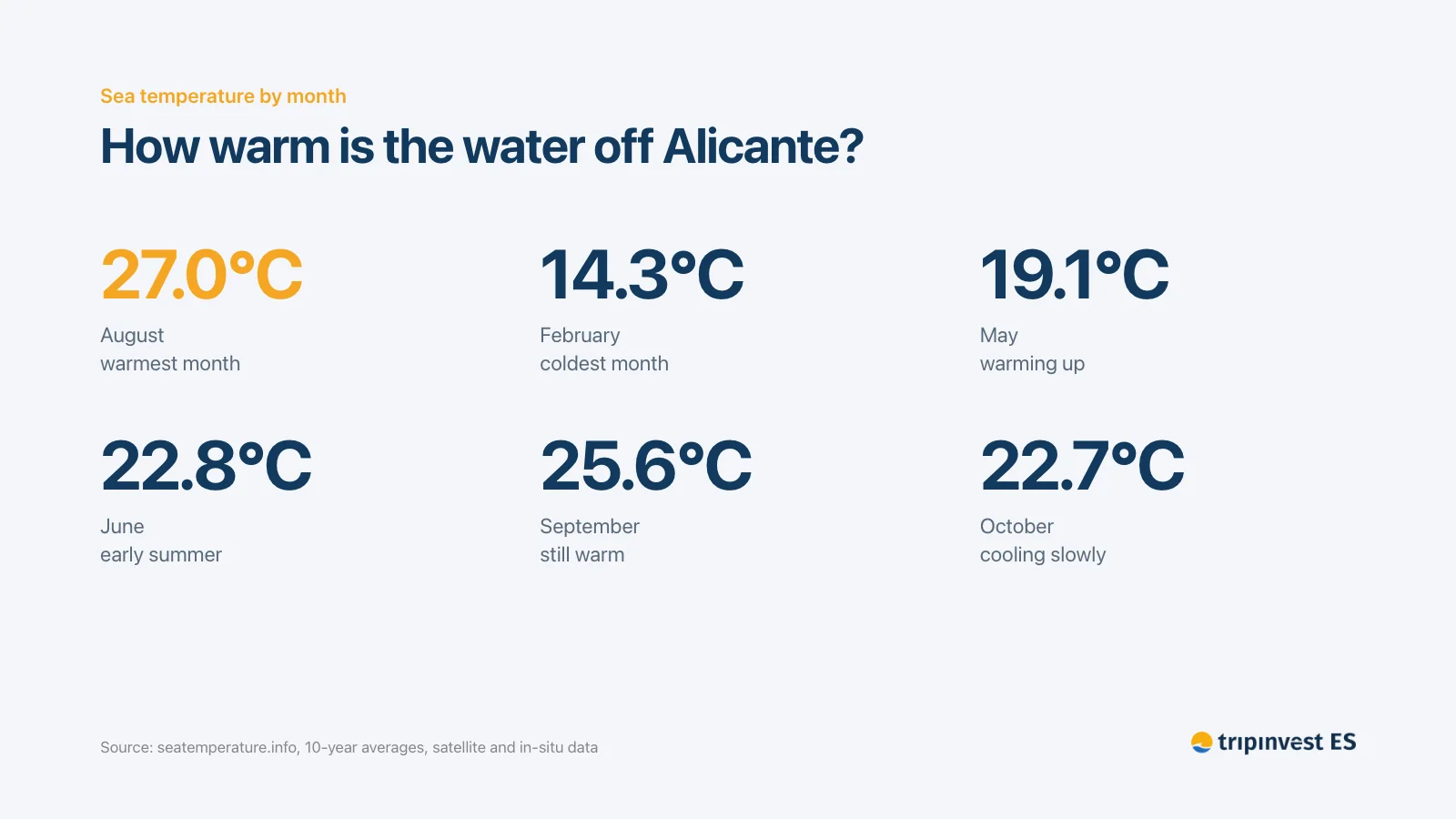
At 14 to 16°C from December to April, you will want a full wetsuit, even on a sunny day. These figures blend satellite and in-situ readings, so treat them as a guide.
Where is the best kitesurfing and windsurfing on the Costa Blanca?
Dénia. The long northern beaches get side-shore wind in spring and summer. The regional tourist board calls Les Deveses the most famous summer spot in the Valencian region, with channels set aside for windsurfers and kiters. The channel at the mouth of the River Racons suits kites best. Dénia's own site lists two schools, Costa Blanca Kiteschool and KITE 45º. Avoid Els Molins until you are competent, because its gusts change direction without warning.
Santa Pola. A large area where you can stand makes this the gentle option, and the water behind the harbour jetty stays flat in south-easterlies. Kites have tighter rules. The council's July 2024 decree put them in a 120 metre channel. Hours were unrestricted from October to May, with limits in June and September. In July, August and Holy Week, kiting was allowed only from 2 pm to 5 pm on weekdays, and never at weekends. That decree ran to 31 May 2025, so ask the council or a local school for the current hours.
El Pinet. An easterly wave spot with a strong shorebreak. Park only in the official spaces, because the Kite and Windsurfing Guide warns of heavy police fines if your tyres touch the dunes.
Altea. The River Algar mouth has consistent wind, but the beach is small and stony and can feel crowded in high summer. The regional tourist board calls it expert-only.
Where are the best surf spots on the Costa Blanca?
You can surf here, but it is not Cornwall or Lahinch. Barceló's guide says Alicante rarely gets enough groundswell, so most waves are made by local wind. These are the surf spots on the Costa Blanca worth knowing:
- San Juan beach, Alicante. Waves break on a sandbar, best in winter. The stretch by the former Hotel Sidi is the busiest, and Barceló's guide says the best time is when the wind is westerly.
- La Zofra, Muchavista. A local favourite on north-westerly days.
- Río Seco, El Campello. Breakwaters tame the swell into a small shorebreak, though the beach is pebbly with urchins.
- El Centro, Villajoyosa. A rocky seabed that can produce left-handers of up to two metres. Not for learners.
- Calpe. A short wave over rock and sand that wants an east-south-easterly swell and an offshore wind from the west-north-west. Mondo Surf says it is not for beginners, and Surf-Forecast warns of urchins, rips and rocks.
- Los Náufragos and La Mata, Torrevieja. The town's 2026 nautical guide says surf is possible at certain times of year.
Where can you go paddle boarding on the Costa Blanca?
For paddle boarding and kayaking, you want shelter rather than wind. The regional tourist board picks out the coves around Jávea and Dénia for relaxed summer paddling, including with young children.
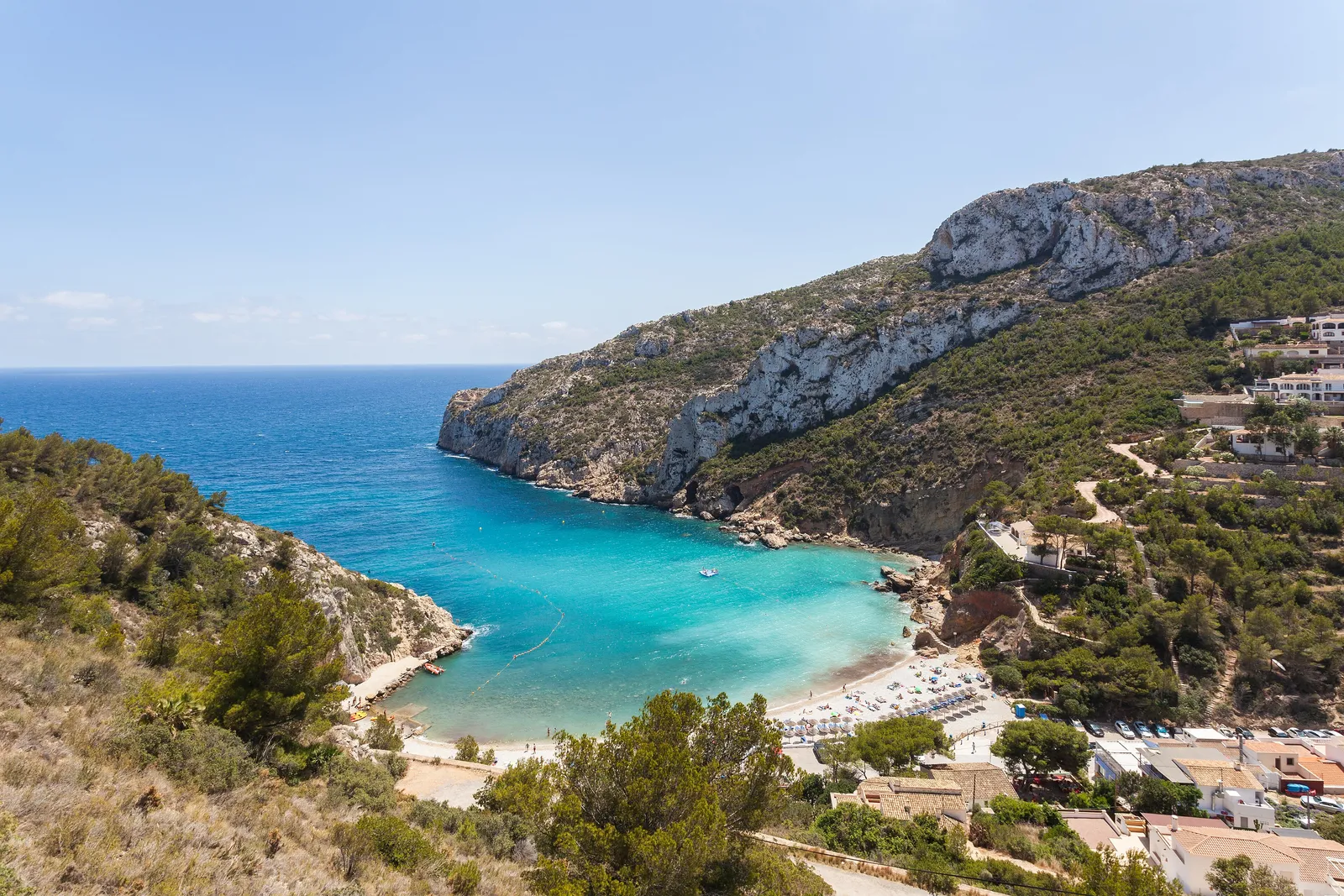
- Jávea (Xàbia). Kokokayak rents kayaks and paddle boards for the Arenal, Portitxol and Cala Granadella. Kayak Javea's guided kayak and snorkel tours to Cova Tallada and Granadella were listed at €50 a person on the regional tourism site.
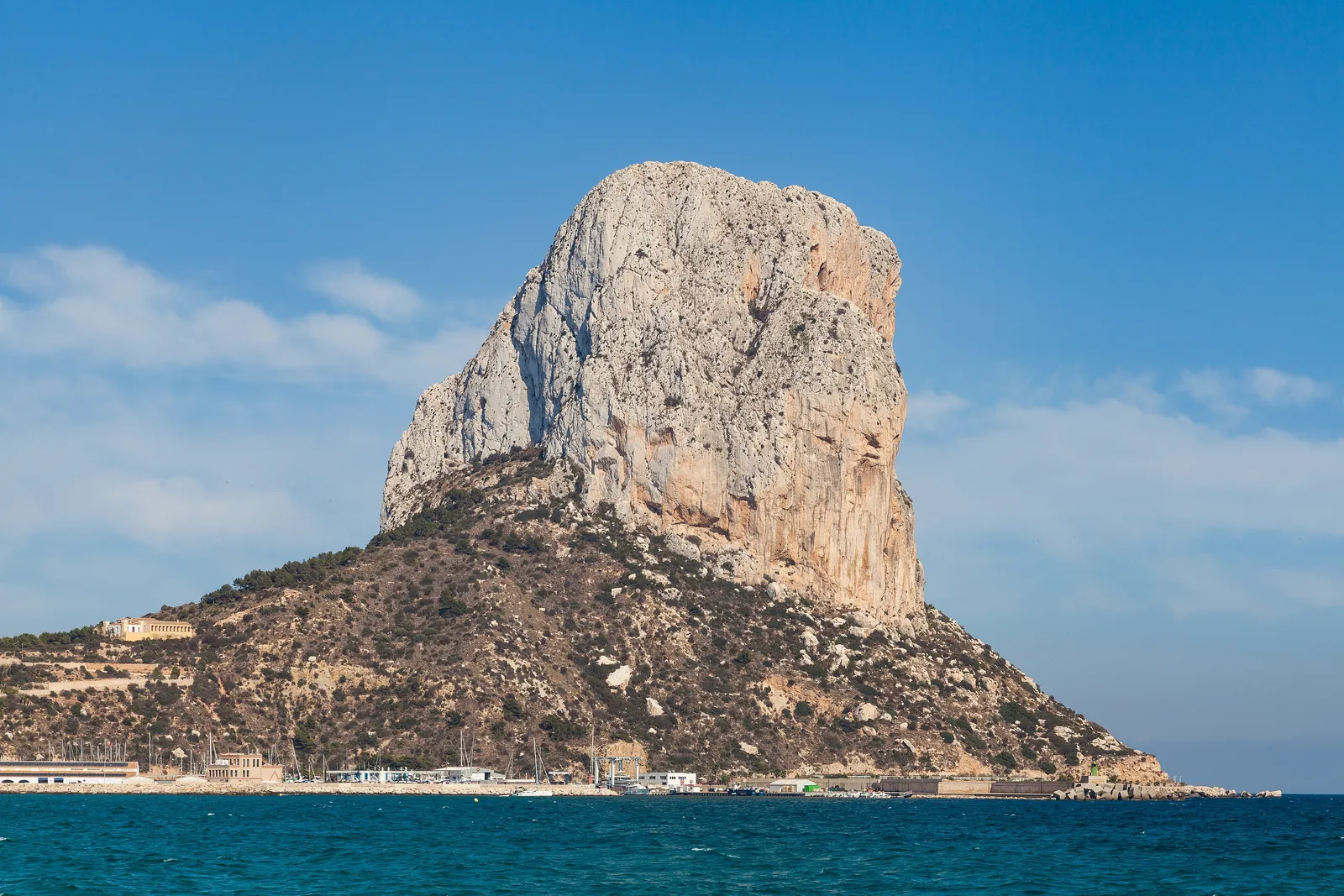
- Calpe. The Real Club Náutico de Calpe offers sailing, kayak, snorkel, paddle surf and diving, at the foot of the Peñón de Ifach.
- Torrevieja. The town's 2026 guide lists kayak and paddle board companies. Los Náufragos beach has calm water and holds a 2026 Blue Flag.
- Altea, Villajoyosa and El Campello. The regional tourist board names all three for kayaking.
One local catch is Cova Tallada, the sea cave between Dénia and Jávea. The Montgó Natural Park site lists regulated access in 2026 from 28 March to 13 April, 28 April to 5 May and 15 June to 15 October, with no permit needed outside those dates. Dénia's tourism site says the permit applies by land or sea, and Javeamigos reported in August 2025 a limit of 21 kayakers at one time and a €601 fine for entering without authorisation.
Where can you try jet skis, parasailing and sailing?
Torrevieja's 2026 nautical guide lists jet ski tours, parasailing, banana rides, pedal boats, boat hire, cable ski and certified navigation courses. The regional tourist board points to Calpe and Dénia for jet skiing, and the Real Club Náutico de Calpe runs sailing courses for beginners and improvers.
Where is the best scuba diving on the Costa Blanca?
| Dive area | What you see | Depth or detail | The rules |
|---|---|---|---|
| Tabarca reserve | Posidonia meadows, rock, grouper, moray | Outer slab at 19 to 25 metres | Scuba needs authorisation. Snorkelling in inner waters does not |
| Cap de Sant Antoni, Jávea and Dénia | Protected seabed with Posidonia | Reserve since 1993 | Permit needed |
| Los Arcos, Calpe | Natural arch with yellow anemones, north face of the Peñón | About 9 metres | Ask a local dive centre |
| Serra Gelada, Benidorm to Altea | Posidonia meadows, islets | About 4,900 hectares of sea | Guided dives offered all year |
Tabarca was Spain's first marine reserve, 11 nautical miles from Alicante. Alicante Turismo's leaflet maps eight snorkel routes and says you need no request to snorkel in the inner waters, while scuba needs authorisation. A permit summary last updated in 2019 lists daily limits per site and bans night dives, so let a dive centre handle it.
Spanish law adds a rule that surprises experienced divers. Under Order APA/126/2019, which names Tabarca among the state marine reserves, every recreational dive in such a reserve needs a qualified dive guide, and you pass a short skills test at no more than 3 metres. The test applies however many dives you have logged, and it lasts two years.
Cap de Sant Antoni takes more planning. The regional tourism site says diving is allowed, but Xàbia's town hall calls it limited and regulated and links to the Generalitat's permit procedure. That procedure asks individual divers for at least 25 logged dives, one in the last 12 months, plus insurance. The simple route is to ask a dive centre.
Serra Gelada suits casual divers. The regional tourism site listed a guided dive at €39 with boat, tank and weights, for all levels.
What are the downsides of water sports here?
- Kites and motor craft have limits. Where no bathing zone is marked, Spanish coastal rules treat the first 200 metres off a beach as bathing water, with a three-knot limit.
- Flags are not advice. Torrevieja's tourism site says bathing is strictly prohibited when the red flag flies, and GOV.UK gives the same warning. GOV.UK also advises against swimming where a river meets the sea.
- Insurance needs checking. GOV.UK is clear that a GHIC or EHIC is not an alternative to travel insurance, and neither card may cover medical repatriation. MoneySuperMarket notes that standard policies don't always cover watersports. Tell your insurer what you plan to do, especially for scuba.
Which town suits you if you are thinking of buying here?
Kiters and windsurfers should start with our guide to property in Dénia. Divers and paddlers have plenty to do around Calpe, so see our guide to property in Calpe and our post on a holiday home in Calpe. Experienced kiters may prefer our post on Altea property. If you also ride a bike, read our Costa Blanca cycling guide.
Our guide to where to live in Spain compares the wider area, or browse homes for sale in Calpe.
Frequently asked questions
Can you surf on the Costa Blanca?
Yes, on the right days. Alicante rarely gets enough groundswell, so most waves here come from local wind. San Juan, Muchavista, Villajoyosa and Calpe are the main breaks, and each needs its own wind or swell. Summer is often flat, so plan for the cooler months and watch the forecast.
What is the best month for water sports on the Costa Blanca?
For most people, September. The sea averages about 25.6°C, and both Dénia's thermal winds and Santa Pola's Leveche are still in season. May and June are the next best window, though the water is cooler at about 19 to 23°C. Surfers should look at the cooler months instead.
Where should beginners start?
Dénia's northern beaches have kitesurfing schools for beginners, and Santa Pola has a large standing-depth area for learning to windsurf. For paddle boarding, try the sheltered coves of Jávea or the calm water at Los Náufragos in Torrevieja. Book lessons first, and let the school pick the day for you.
Do you need a permit to dive at Tabarca?
Yes for scuba, no for snorkelling in the inner waters. Scuba needs authorisation, and Spanish rules for state marine reserves add a qualified dive guide and a short skills test, valid for two years. Daily limits can apply, so book through a local dive centre.
Is the sea warm enough in winter?
Not without a wetsuit. The sea off Alicante averages about 14.3°C in February, its coldest month, and 16.4°C in December. The air is kinder, with average daytime highs of 17 to 21°C from November to April. Bring a full wetsuit if you plan to sail or surf in winter.
Can you kitesurf anywhere on the Costa Blanca in summer?
No. Spanish coastal rules ban sail and motor craft from marked bathing zones, and launching must use marked channels. Towns add their own rules, as Santa Pola has done with limited hours in July and August. Use a recognised channel or school, and check the local rules before you unpack the kite.
Thinking about a home near the water?
If the coast is why you are looking at Spain, tell us which sport matters most and how you plan to use the home. We will help you narrow down the towns and guide you from the first call to the notary, in English. We are a licensed agency (RAICV 4221). Our clients don't pay us commission.
Prefer to talk? Call us on +44 20 3888 0008.
Sources
Last checked: October 2026
- BOE: Reglamento General de Costas, article 73 on bathing zones
- BOE: Orden APA/126/2019 on responsible recreational diving in marine reserves
- AEMET: climate normals for Alicante, 1981 to 2010
- GOV.UK: Spain travel advice, safety and security
- GOV.UK: Spain travel advice, health
- Generalitat Valenciana: authorisation for recreational diving in marine reserves
- Parcs Naturals GVA: El Montgó, regulated access to Cova Tallada
- Parcs Naturals GVA: Serra Gelada
- Bandera Azul: beaches awarded in 2026
- Ayuntamiento de Santa Pola: kitesurf decree 2024-2016
- Turismo Torrevieja: nautical guide 2026
- Alicante Turismo: Tabarca snorkel leaflet
- Dénia tourism: kitesurfing
- Dénia tourism: Cova Tallada
- Xàbia tourism: Cap de Sant Antoni reserve
- Xàbia: Cap de Sant Antoni reserve leaflet
- Comunitat Valenciana: kitesurfing and windsurfing spots
- Comunitat Valenciana: water activities on the Costa Blanca
- Comunitat Valenciana: Cap de Sant Antoni marine reserve
- Comunitat Valenciana: Serra Gelada Natural Park
- Comunitat Valenciana: guided diving in Serra Gelada
- Comunitat Valenciana: diving in Calp
- Comunitat Valenciana: Outer Tabarca dive site
- Comunitat Valenciana: Kokokayak, Jávea
- Comunitat Valenciana: kayak and snorkel tours to Cova Tallada and Cala Granadella
- Turismo Torrevieja: Los Náufragos beach
- Kite and Windsurfing Guide: Costa Blanca region
- Kite and Windsurfing Guide: Santa Pola
- Kite and Windsurfing Guide: Guardamar
- Kite and Windsurfing Guide: El Pinet
- Kite and Windsurfing Guide: Altea, Río Algar
- Kite and Windsurfing Guide: Sant Joan
- Kite and Windsurfing Guide: Campello, Río Seco
- Surf-Forecast: Calp surf break
- Mondo Surf: Calpe Rock
- Barceló: surfing in Alicante
- seatemperature.info: Alicante sea temperature
- seatemperature.org: Alicante sea temperature
- Javeamigos: Cova Tallada booking rules, 20 August 2025
- Papelea: Tabarca scuba permit summary, updated 18 December 2019
- MoneySuperMarket: travel insurance for Spain