
Property in Spain for foreign buyers – how to safely buy a house or apartment
Buyer's guide
Property in Spain for foreign buyers – how to safely buy a house or apartment
Property in Spain is attracting growing interest from foreign buyers, because for many people it combines lifestyle, the security of a capital investment and the chance to use a house or apartment for much of the year. Find out what buying property in Spain looks like for foreign buyers – the documents, formalities, NIE number, bank account and a safe purchase process.
Want to understand the full purchase process? Read our guide on buying property in Spain step by step to learn about every stage of the transaction.
Can a foreigner buy property in Spain?
Yes, a foreigner can buy a flat, an apartment, a house or a villa in Spain. The purchase itself does not require Spanish citizenship. In practice, however, the key is to prepare the documents properly and complete the formalities in a safe order. As an EU citizen buying in Spain, you benefit from the principle of equal treatment when purchasing property.
It is worth separating two issues right away. One is the purchase of the property, and the other is residence and the registration of residence in Spain. The Spanish Police note that EU citizens planning to stay in Spain for longer than 3 months are obliged to register in the Central Register of Foreigners. This does not mean, however, that the ability to buy property in itself depends on first obtaining residency.
Tip: Official information on the rights of EU citizens when buying property is available on the Your Europe website.
Buying property in Spain – where to start?
Choosing the location and the purpose of the purchase
The best way to start buying property in Spain is to define the purpose of the purchase. A holiday apartment close to the beach is chosen differently from an investment property for rental, and a home for living in regularly for most of the year is different again. At this stage it is worth looking not only at the asking price, but at the full budget for the transaction.
For the buyer, it is not only the property itself that matters, but also the location, access to an airport, seasonality, infrastructure and the potential for resale or rental. That is why, right from the start, it is worth narrowing your choice down to specific areas, for example Costa Blanca South or Costa Blanca North, and only then comparing offers according to budget and standard.
Check current listings: property in Costa Blanca, property in Torrevieja and property in Calpe.
Reserving the property
When a buyer chooses a particular house or apartment, a reservation stage usually follows. This is a moment that should not be treated as a mere formality. Before you pay a deposit, it is wise to check the basic information about the property, the reservation terms and the clauses on any refund of funds should problems with the documentation come to light. This stage is best handled carefully and without acting under time pressure.
Checking the documents and legal status
One of the basic documents when verifying a property is the nota simple from the Land Registry. Registradores states that a nota simple online officially costs 9.02 euros plus VAT. It is a document that helps you check the owner, the basic details of the property and any entries and encumbrances.
In practice, a safe property purchase in Spain should cover not only checking the basic registry document, but also analysing all the available documentation and the consistency of the legal status with the actual state of affairs. This is precisely why it is better to carry out a property purchase with the help of a lawyer rather than on your own.
More information: Find out how to check a property in Spain before buying - a step-by-step guide.
The NIE number
The NIE number is a foreigner's identification number that is needed for many formalities in Spain. The official procedure of the Spanish Police indicates that submitting an application requires, among other things, the EX-15 form and confirmation of payment of the model 790 code 012 fee.
In practice, it is worth obtaining the NIE number well in advance, because without it the later stages of the purchase process are difficult to complete smoothly. It is one of the basic organisational elements for the buyer.
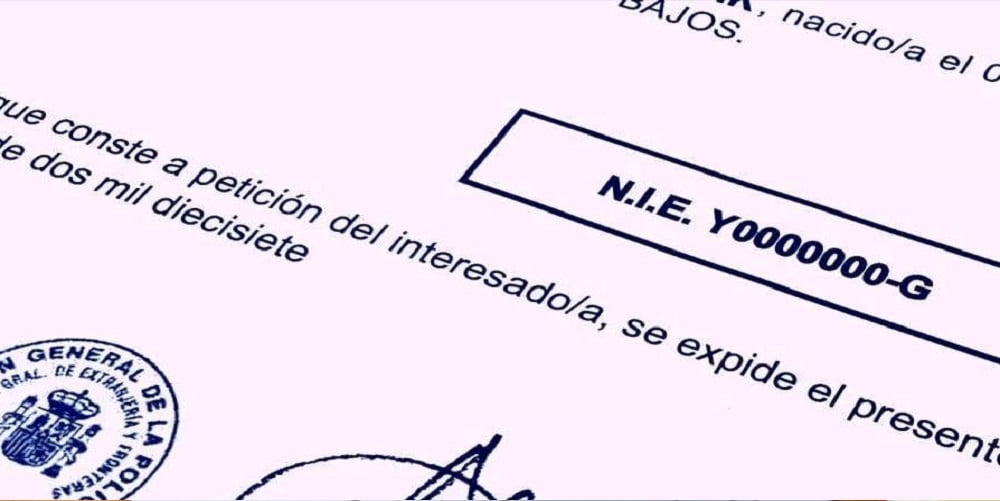
Tip: The official procedure for issuing a NIE number is described on the Policía Nacional website.
Bank account and organising payments
A bank account in Spain makes it much easier to organise the transaction, as well as later payments for utilities, the residents' association, local taxes and the day-to-day upkeep of the property. From the buyer's perspective this is usually a practical step that brings order to the whole process and reduces the risk of organisational chaos when finalising the purchase.
Useful article: See a bank account in Spain for non-residents - how to open one and what you need.
The preliminary contract and the notarial deed
Once the documents have been checked, a preliminary contract is usually signed, and the purchase is finalised before a notary. Notariado explains that the notary hands over or sends electronically a simple copy of the deed, and the entry in the Land Registry is then confirmed by a note regarding the registration. At the same time, notarial fees in Spain are regulated by a state tariff, which means they are not entirely arbitrary.
What documents are needed when buying property in Spain?
In practice, the buyer should first of all prepare an identity document, a NIE number and the funds and documents needed to carry out the payments correctly. In addition, documents relating to the property itself come into the process, including information from the Land Registry.
The Spanish Police confirm the requirements for the NIE number application, and Registradores describes access to registry information. For safety, it is best not to gather and interpret everything on your own. Buying property in Spain is considerably calmer when the documents are checked by a lawyer handling the transaction on the formal side.
How much does it cost to buy property in Spain?
The most practical assumption for the buyer is this: add around 14–15% in total costs on top of the purchase price. That sum usually covers taxes, the notary, the registry, documents, translations, administrative fees, any powers of attorney and legal services. The nota simple itself officially costs 9.02 euros plus VAT, and the NIE procedure requires the model 790 code 012 fee. Notarial fees, in turn, are regulated by tariff.
Detailed guide: Learn about the costs of buying property in Spain - all the taxes and fees.
Important note
14–15% is not a single official tax rate, but a practical, safe assumption for the overall budget. This way the client plans the purchase realistically, rather than just on the basis of the listing price.
Why is it worth buying property with the help of a lawyer?
The best practice when buying property in Spain is to use the help of a lawyer rather than acting on your own. Even if an offer looks very good, the documentation may contain issues that require expert analysis.
A lawyer checks the legal status of the property, analyses the documents, verifies the contract clauses and spots risks that the buyer usually would not see on their own. From the point of view of transaction safety, this is one of the most important safeguards in the whole process. The recommendation does not stem from marketing, but from the nature of the Spanish system of notarial and registry documents, which requires careful formal analysis.
What to watch out for when buying a house or apartment in Spain?
The most common mistakes buyers make are deciding to reserve too quickly, focusing solely on the asking price and underestimating the total costs. The second common mistake is interpreting documents on your own without the support of a lawyer. The third is leaving the NIE number and organisational matters until the last minute.
A safe purchase process should include:
- Choosing a property matched to your purpose
- Analysing the location
- Checking the documents
- Obtaining a NIE number
- Organising the payments in advance
- Signing the notarial deed
- Wrapping up the post-purchase formalities
Summary
Buying property in Spain is a real and accessible option for foreign buyers, but the purchase should be well prepared. A foreigner can buy property in Spain, yet a safe process requires documents, a NIE number, a check of the legal status and proper organisation of the transaction. From a budgetary point of view, it is wise to assume that the total additional costs will amount to around 14–15% on top of the property price. At the same time, the most sensible approach is to use the help of a lawyer, because it is precisely at the document-checking stage that costly problems are easiest to avoid.
Related articles and listings
Sources / External links
Below are the official sources from which the information in this guide is taken:
The obligation for EU citizens to register residence over 3 months
Policía Nacional Official websiteFrequently asked questions
Can a foreigner buy a flat in Spain?
Do you need a NIE number to buy property in Spain?
Do you need residency to buy property in Spain?
How much does it cost to buy property in Spain?
Is it worth using a lawyer when buying property in Spain?
Want to buy property in Spain without chaos or risk?
Get in touch with Tripinvest ES — we will help you go through the whole process safely, with the right legal support and full control over costs.
Get in touch